
How Bridges Are Built
Hate. Humanity. Empathy. Connection. Renewal.

Hello, and welcome — and thank you.
Thank you for being here, for choosing curiosity over apathy. Every moment you spend seeking understanding instead of outrage is an act of citizenship. It’s also something both foreign adversaries and domestic agitators don’t want you to do — they want us distracted, divided, and exhausted. A disengaged America is easier to manipulate.
The other night, my YouTube algorithm served up a thumbnail that caught my eye. Curiosity got the best of me, so I clicked — and I’m glad I did. The film that followed, White Right: Meeting the Enemy, reminded me of two essential truths: white supremacy is real, and even those consumed by hate are still human — capable of empathy when met with patience and understanding. Today, I want to share what stood out to me and why I think this film matters.
There’s still a belief in some circles that white supremacy is a myth — that Charlottesville was exaggerated, and that Trump’s “very fine people on both sides” remark was misunderstood. But White Right: Meeting the Enemy strips away those denials. It shows what actually happened: the chants of “Jews will not replace us,” the ideology behind them, and the movement that turned those words into violence.
Those chants weren’t isolated. They came from a worldview rooted in the Great Replacement theory — the false idea that Jews and immigrants are plotting to “replace” white Americans. That same myth now circulates through mainstream politics. Commentators like Charlie Kirk have echoed its logic, framing demographic change as a threat instead of a natural evolution. That framing radicalized audiences and gave new life to the same fear that fueled Charlottesville.
And that fear didn’t fade — it organized. As I explored in my last piece, MAGA operates as an ecosystem: leaders, media, and money all reinforcing one another. Around it orbit groups like the National Socialist Movement, Patriot Front, the Oath Keepers, and the Proud Boys — all overlapping in message, recruitment, and grievance. They share one belief: that violence in defense of “their America” can be patriotic. Understanding that connection matters, because it proves Charlottesville wasn’t an ending — it was a rehearsal for what came next.
Today, those same circles are trying to rewrite the story, turning figures like Charlie Kirk into martyrs while billionaire backers like Vivek Ramaswamy amplify his reach. Their message to young people is simple but dangerous: “Don’t go to college. Don’t trust the media. Don’t think critically.”
And that’s the real threat. When citizens stop thinking critically, free societies begin to decay. Democracy depends on curiosity — on people willing to question, listen, and stay informed. We may have lost that muscle for a while, but recognizing it — and rebuilding it — is how we begin to recover.
Owl Perspective: White supremacy is real, and the Great Replacement myth — the false belief that immigrants and Jews are conspiring to “replace” white Americans — continues to drive real-world violence. Figures like Charlie Kirk have helped normalize pieces of that narrative under the banner of patriotism and faith, packaging fear as civic duty.
That’s what makes White Right: Meeting the Enemy worth watching. If a Muslim woman like Deeyah Khan can build a bridge with a neo-Nazi, then we — as Americans, as neighbors, as family — can reconnect too. The film shows that empathy and understanding aren’t signs of weakness; they’re the foundation of a free and open society. Because democracy doesn’t collapse from disagreement — it collapses when we stop engaging with one another as human beings.
This film takes us inside the world of organized white supremacy — not through commentary, but through direct access.
Deeyah Khan sits across from Jeff Schoep, leader of the National Socialist Movement (NSM), who proudly describes it as a “white civil-rights organization.” She meets Brian Culpepper, the NSM’s public-relations director, who trains members in Tennessee to prepare for “defensive” street battles. She interviews Ken Parker, a former Klan grand dragon, as he hands out flyers covered in swastikas and antisemitic slogans.
The film documents explicit Nazi symbols — tattoos, uniforms, 14/88 codes — and conversations that make their ideology unmistakable. Schoep says Trump’s 2016 message — “build the wall,” “bring back jobs,” “America first” — came straight from their playbook. Members call multiculturalism a Jewish plot and repeat the conspiracy that “Jews control the media.” Their words reveal the same Great Replacement fear that fueled the Charlottesville rally — the chants of “You will not replace us” and “Jews will not replace us” — which Khan filmed as violence erupted and Heather Heyer was killed.
Charlottesville connects the names we now know: Schoep and the NSM, Richard Spencer’s “alt-right” network, Jared Taylor’s “white advocacy” rhetoric, and the broader constellation of groups — the Proud Boys, Oath Keepers, and Patriot Front — that overlap ideologically with MAGA’s political ecosystem.
Khan doesn’t confront with anger; she listens. When she reads racist hate mail aloud, Schoep can’t meet her eyes. When Parker’s girlfriend is helped by a Muslim woman from a local mosque, his hatred begins to falter. Later, Culpepper — the same man who once said he would deport her — resigns from the NSM, telling her simply, “Because we’ve become friends.”
Those moments matter because they show that hate collapses under human contact. The illusion of total division breaks when empathy enters the room.
Again, white supremacy is not a myth. The Great Replacement theory drives fear that fuels violence. MAGA’s media and political figures have learned to use that same fear — without the hoods and symbols — to build power and loyalty. That’s why they work so hard to distort what happened in Charlottesville, or to hide what voices like Charlie Kirk helped justify.
The truth is simpler: fear is how power divides us. Empathy is how we take that power back.
At the end of the day, Deeyah Khan proved that patience can reach places shouting never could. If she can find the humanity in a neo-Nazi, then we can reach our friends and family too. The people repeating MAGA talking points aren’t white supremacists — they’re people who’ve been shaped by fear, misinformation, and repetition. We can reconnect with them — not to win an argument, but to rebuild understanding.
That work starts with us — in every conversation, at every dinner table, and in every election. The next midterm matters. If you feel powerless watching all this unfold, remember: voting is the most direct form of nonviolent resistance to authoritarianism. Winning supermajority in Congress isn’t just a goal — it’s how we protect truth, law, and accountability by impeaching Donald Trump for his crimes.
The last few years, I’ve worked hard to dial in how I communicate — and these are a few things that have really helped. Maybe they’ll help you too.
Listen to understand, not to respond. Ask questions that invite reflection instead of defense — and acknowledge what the other person said. It helps them feel heard, even if you disagree.
Use AI to listen better. Copy what someone says into ChatGPT or Gemini and ask, “What is this person actually trying to say?” It slows you down, helps you read intent, and find the calmest, clearest way to respond.
Stay grounded in facts. Emotion can blur reality, but evidence keeps you upright. Return to what’s verifiable — not memes, not outrage — just truth.
Know when to steer or stop. If the conversation turns into name-calling, constant deflection, or rejection of basic principles like the separation of church and state, change the subject or end it. Not every exchange is worth your energy.
End with shared values. Freedom, fairness, honesty — and protecting women, families, and life. Most people still believe in those things. Start there.
The goal isn’t to change every mind — it’s to keep real conversations alive. I’ve spent years talking with people — in professional settings and in everyday life — and I’ve made plenty of mistakes along the way. I’ve learned how easy it is to let emotions take over, and how much harder it is to stay calm when it matters most. These ideas come from that experience.
Real conversations don’t just strengthen understanding — they’re healthy for us. Talking, listening, and connecting release oxytocin, the hormone that eases stress and builds trust. Keeping expectations real helps: you won’t shift someone’s perspective overnight, and matching frustration never builds respect. Calm, patience, and empathy speak louder than name-calling ever will. Try these ideas, see how they feel in your own conversations, and let me know what works — I want to hear what helps you connect and what still feels challenging. And above all, remember — we’re human.

Thank you for choosing curiosity over apathy. Every reader who takes the time to understand instead of react helps strengthen this democracy. Your attention, thought, and willingness to engage are what keep truth alive.
If this piece resonated with you, please subscribe — it’s free — and don’t forget to like and leave a comment. The algorithm notices thoughtful engagement, and every bit of support helps this work reach more people who care about understanding, not outrage.
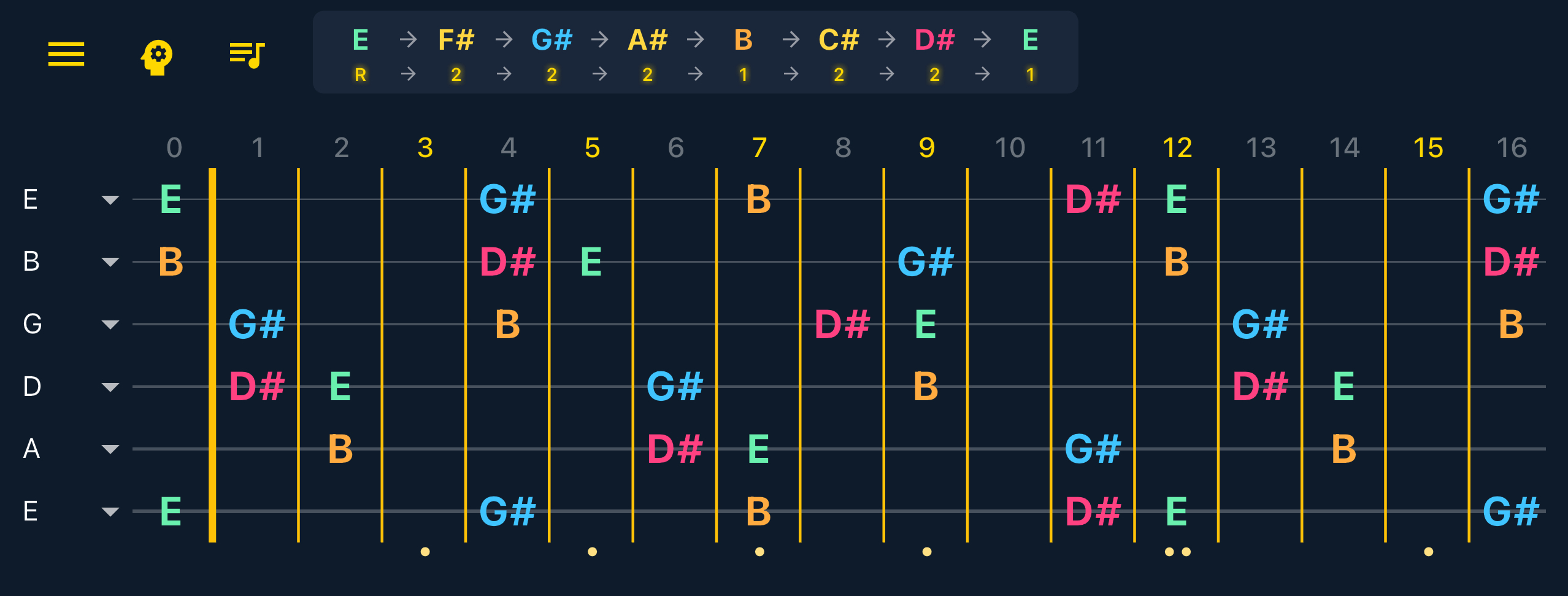
If you’d like to support my work financially, consider a one-time purchase of The Strategic Fretboard — my music-meets-civic-learning project designed for guitarists and bassists. It’s not just a teaching tool; it’s a different way of thinking — built to help players see the fretboard as a language, not a maze of memorized shapes. Every purchase helps keep The Strategic Owl free and independent, with no paywalls or sponsors — just truth, reliability, and understanding.
It’s perfect for players who love to learn, and it makes a thoughtful gift for a MAGA-leaning family member who might appreciate something creative, grounded, and real — something that invites curiosity instead of conflict. Because learning to see the fretboard differently isn’t just about music; it’s about perspective.
Don’t let apathy win. Fight the good fight, America.
Taylor Irby — October 17th, 2025
Independent Analyst: Data-Driven. Reality-Focused.
https://thestrategicowl.com ← Using Truth to measure credibility.
Android coming soon.
Support my work - Buy me a cup of coffee - treat yourself!
The Strategic Fretboard < - Music based on logic. Android avail via .apk download.
The Strategic Fretboard on the Apple App Store.
Thank you for this calm, insightful piece. We all need help in learning to talk with each other more effectively. I believe humans are kind, caring people at heart. And yet, movements like Charlottesville are real and purposeful in projecting hate. Thank you for clarifying that. Misinformation can be dangerous. These are dangerous times, and we can effectively put our energy into calmly connecting rather than reacting. I needed this reminder.
After having it out with my “Kirk loving/Great replacement” touting son in law I was repulsed to the point of saying I couldn’t be around him. Then I watched the Khan documentary & was humbled. If she can do it hopefully so can I!